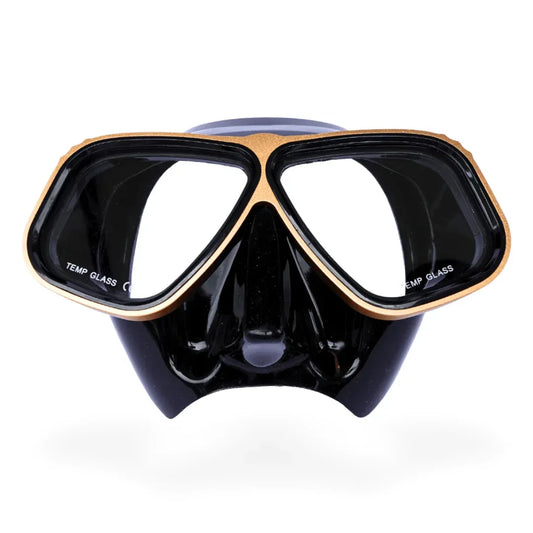
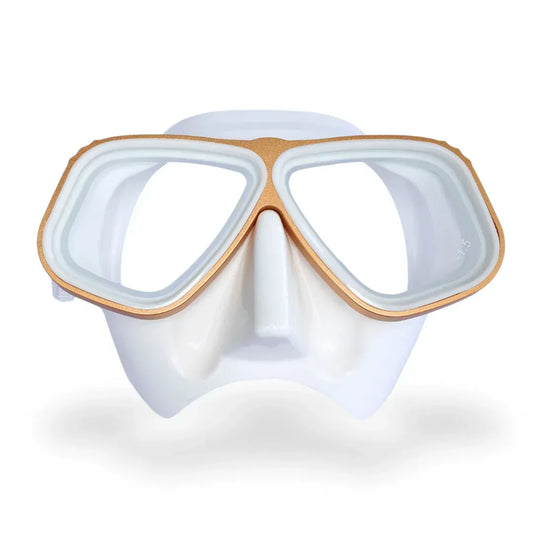
Why mask fit matters as much as prescription strength
A prescription snorkel mask or scuba mask is only useful if it seals properly. A mask that leaks lets water in, fogs constantly, and no lens strength will fix that. Getting the fit right before you order is the single most important step in the buying process.
The good news is that two measurements tell you almost everything you need to know: how wide your face is at eye level, and how tall the space is from your brow to the base of your nose. These two numbers determine whether a mask frame can sit cleanly on your face without the skirt pressing on your eyebrows, nose, or cheekbones.
The easiest way: use our Face Fit Tool
Recommended
Try our Face Fit Tool at facefit.oceansoptics.com
Use your phone or laptop camera to measure your face in under 60 seconds. The tool takes your eye width and brow-to-nose height automatically, then matches them against our mask database to recommend your best fit. No tape measure needed.
Measure my face nowIf you prefer to measure manually, or want to understand how the sizing works, the guide below walks you through exactly what to measure and what the numbers mean for each mask.

What you need for manual measuring
- A soft measuring tape (or a rigid ruler held flat across your face)
- A mirror
- Something to note your measurements
Measure in centimetres. The mask sizing ranges below are given in both inches and centimetres so you can use whichever is easier.
Measurement 1: eye width
Stand facing a mirror. Place the tape or ruler flat across your face at eye level, from the outer corner of your left eye to the outer corner of your right eye. Do not wrap the tape around the curve of your face. Keep it flat and straight, as if you are measuring across a table.
This measurement tells you whether the mask frame is wide enough to sit outside your eye corners. If the frame is too narrow, the skirt will press on the outer corner of your eye and the seal will fail.
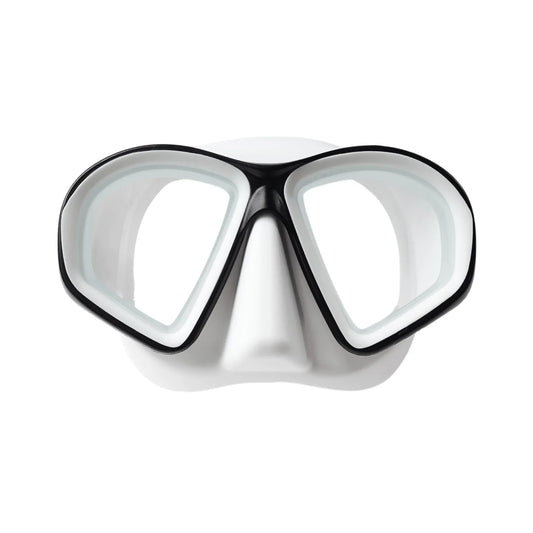
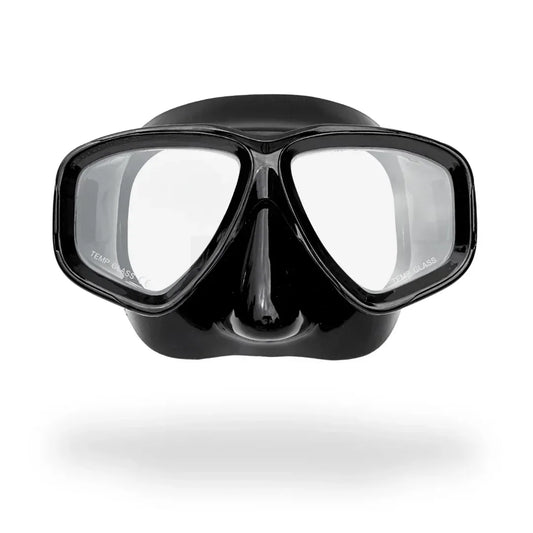
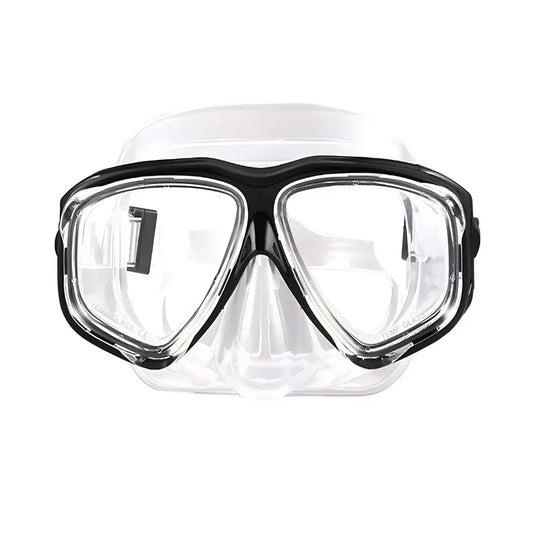
| Eye width | Rx Rover | Rx Obsidian | Rx Lumix |
|---|---|---|---|
| 7.5 to 11.5 cm (2.95" to 4.53") |
In range | Check height | Check height |
| 8.8 to 12.7 cm (3.46" to 5.00") |
Check height | In range | Check height |
| 9.0 to 14.0 cm (3.54" to 5.50") |
Check height | Check height | In range |
The ranges overlap, so more than one mask may fit your eye width. That is normal. Height is what separates them in most cases.
Measurement 2: brow to nose height
Measure from the base of your nose (where it meets your upper lip) up to the middle of your brow line. Keep the tape straight and vertical, not following the curve of your face. This tells you how much vertical space the mask needs to cover without the top of the frame pressing on your brow or the nose pocket sitting too high.
| Brow to nose height | Rx Rover | Rx Obsidian | Rx Lumix |
|---|---|---|---|
| 6.0 to 9.0 cm (2.35" to 3.54") |
In range | Check width | Check width |
| 6.4 to 10.2 cm (2.50" to 4.00") |
Check width | In range | Check width |
| 6.4 to 9.7 cm (2.50" to 3.82") |
Check width | Check width | In range |
Putting it together: which mask fits?
Once you have both measurements, find the mask where both your eye width and your brow-to-nose height fall within the range. If only one dimension fits, the mask is unlikely to seal properly.
Example
Eye width: 9.5 cm Brow to nose: 7.2 cm
Eye width of 9.5 cm falls within the Rx Rover (7.5–11.5 cm), the Rx Obsidian (8.8–12.7 cm), and the Rx Lumix (9.0–14.0 cm).
Brow to nose of 7.2 cm falls within the Rx Rover (6.0–9.0 cm), the Rx Obsidian (6.4–10.2 cm), but not the Rx Lumix minimum of 6.4 cm (7.2 cm is in range there too actually).
Result: All three masks fit on paper. The Rx Rover is the smaller option; the Rx Obsidian gives the widest lens range (-1.00 to -9.00). Use the Face Fit Tool to get a scored recommendation.
What about the Rx Rover vs the Rx Obsidian?
If your measurements fit both masks, the decision usually comes down to two things.
Face size: The Rx Rover is designed for smaller faces. If you are petite or have found that standard diving masks feel oversized, the Rover is the better starting point. The Obsidian fits a wider range and is the most popular mask we sell.
Prescription range: The Rx Rover goes from -1.50 to -6.00. The Rx Obsidian goes from -1.00 to -9.00 for nearsighted, and also covers farsighted prescriptions. If your prescription is outside the Rover's range, the Obsidian is the only single-lens option.
If you are between sizes
If your measurements sit at the edge of a mask's range rather than comfortably inside it, that mask may still seal but is more sensitive to face shape and skirt flexibility. Use the Face Fit Tool for a scored result that accounts for how centred your measurements are within each range, not just whether they fall inside it.
Dry fit test before you dive
Once your mask arrives, do a dry fit before getting in the water. Place the mask against your face without putting the strap on. Inhale lightly through your nose. If the mask stays in place for a few seconds, the skirt shape is matching your face contours. If it falls away immediately, the skirt is not making full contact somewhere and you will get leaks underwater.
This test does not require water. It takes ten seconds and is the most reliable way to confirm fit before your first dive.
Not sure which mask to order?
Use our Face Fit Tool for a camera-based measurement that takes under 60 seconds and gives you a scored recommendation for each mask. Or get in touch and we will help you work it out from your measurements directly.